
Sami Languages Are Worth Learning. Here's Exactly Why.

Author
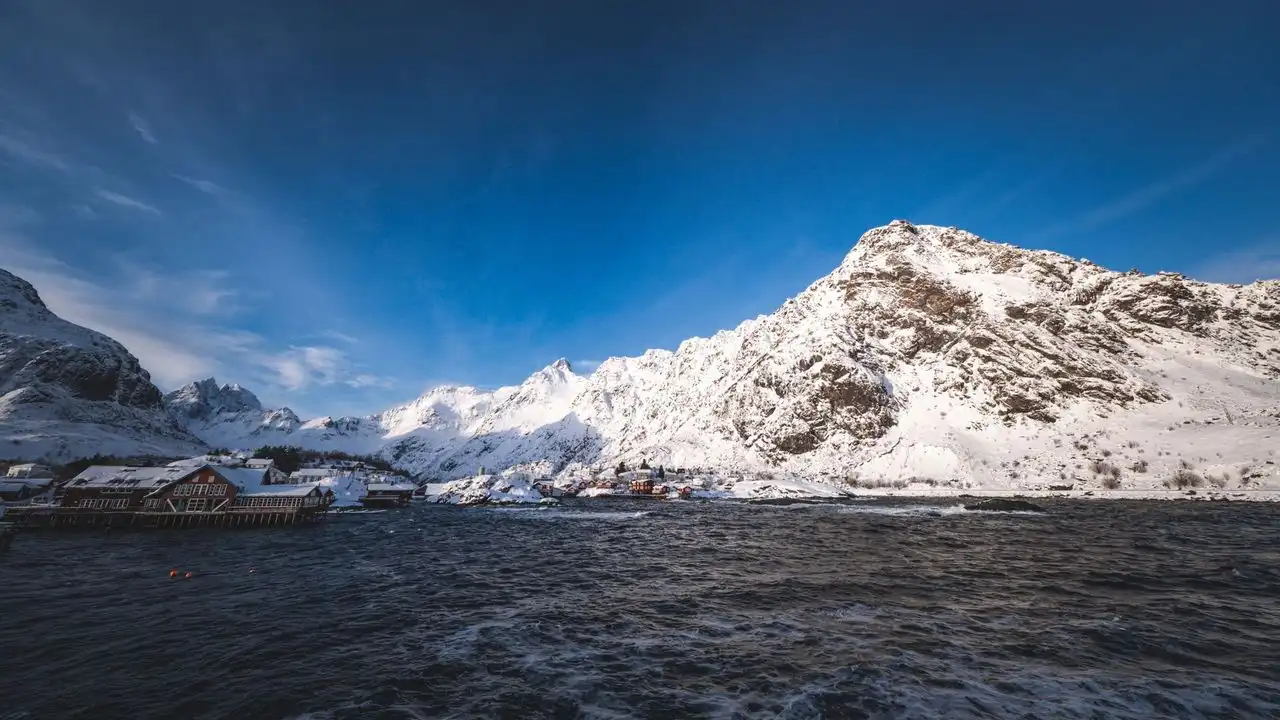
Learning a Sami language opens the door to one of Europe’s oldest and most fascinating indigenous cultures.
You’ll gain access to a completely different way of seeing the world.
The Sami languages are spoken across Sápmi, a region stretching over the northern parts of Norway, Sweden, Finland, and Russia.
There are actually nine distinct living Sami languages, with North Sami being the most widely spoken.
Choosing to learn any of these languages is a highly rewarding decision.
Here’s exactly why Sami languages are worth your time and effort.
Table of Contents:
Deep connection to nature and culture
The Sami people have lived in harmony with the Arctic environment for thousands of years. Their languages reflect this intimate relationship with nature and the changing seasons.
For example, Sami languages have hundreds of specific words for snow, ice, and reindeer.
You can’t simply translate these concepts directly into English.
Learning these words gives you a profound insight into traditional Sami survival and daily life.
It completely shifts your perspective on the natural world around you.
You’ll understand the environment strictly through the lens of indigenous knowledge.
Preservation of an endangered language family
Every single living Sami language is currently classified as endangered.
Historically, harsh assimilation policies in Nordic countries heavily suppressed the use of these languages.
By learning a Sami language, you actively participate in its revitalization. You bring life back to words and expressions that are at risk of fading away entirely.
Every new learner adds strength and visibility to the Sami-speaking community.
This makes your language learning journey a powerful act of cultural preservation.
You’re helping to ensure that future generations can still hear and speak Sami.
Understanding unique grammatical concepts
Sami languages belong to the Finno-Ugric language family. They’re completely unrelated to Germanic languages like English, Norwegian, or Swedish.
This means you get to exercise your brain by learning entirely new grammar structures.
Sami languages don’t use prepositions in the exact same way English does.
Instead, they rely on a rich system of grammatical cases attached to the ends of words.
They also feature a dual pronoun, meaning there’s a specific word for “we two” versus “we three or more”.
Here’s a simple look at how the North Sami pronouns work across singular, dual, and plural forms.
| Person | Singular (One) | Dual (Two) | Plural (Three+) |
|---|---|---|---|
| 1st Person | mun (I) | moai (we two) | mii (we) |
| 2nd Person | don (you) | doai (you two) | dii (you all) |
| 3rd Person | son (he/she) | soai (they two) | sii (they) |
These unique structures force you to think differently and improve your overall cognitive flexibility.
Career and travel opportunities in Sápmi
Sápmi is a stunningly beautiful region that attracts visitors from all over the globe.
Speaking a Sami language instantly transforms your travel experience. Locals deeply appreciate anyone who takes the time to learn their native tongue.
You’ll easily form genuine connections that most tourists completely miss.
There’s also a growing demand for Sami speakers in various professional fields.
Sami media, education, healthcare, and tourism sectors constantly need bilingual individuals.
Your language skills can open up unique and fulfilling career paths across the Nordic countries.
Learning a Sami language is about much more than just memorizing vocabulary.
It’s a highly meaningful way to connect with an ancient culture and protect an endangered heritage.
The mental challenge of the grammar will make you a much stronger language learner overall.