Sámi Words For Snow: A Guide To Winter Vocabulary

Author
You have probably heard the famous fact that people in the Arctic have hundreds of words for snow.
Usually, people talk about the Inuit, but this is actually even more true for the Sami people.
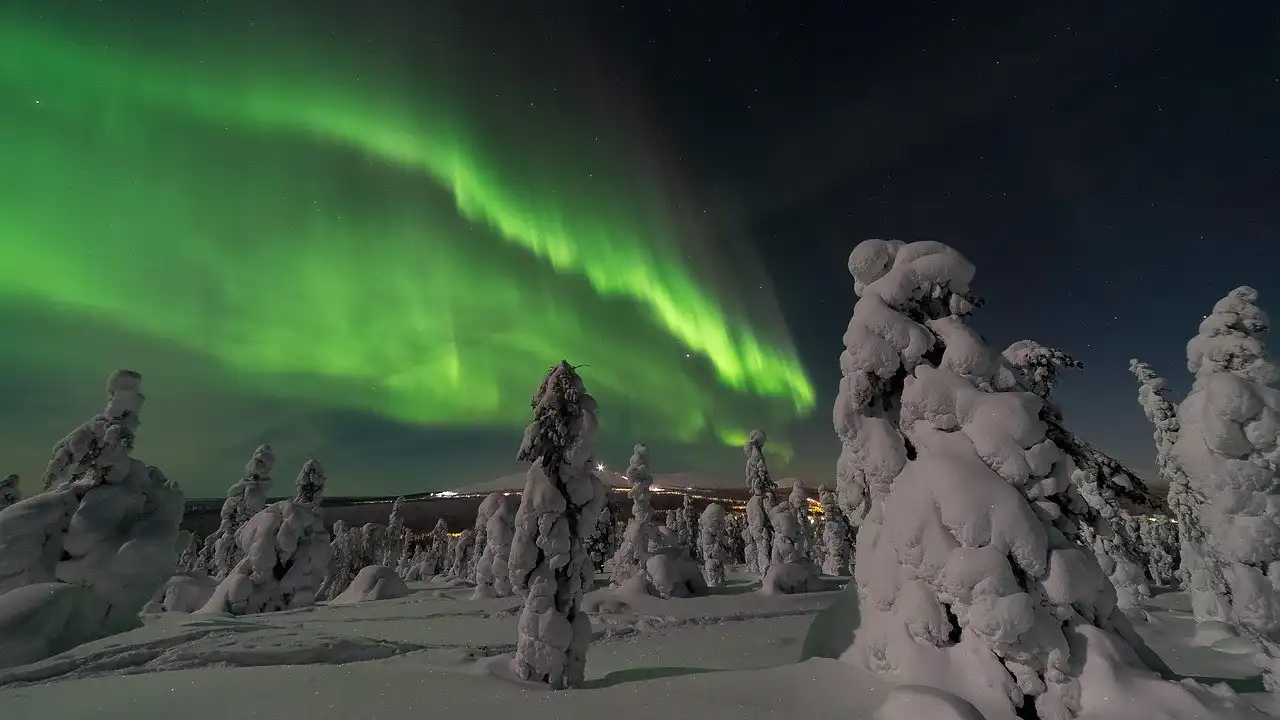
Living in Sápmi (the Sami homeland), winter is the longest season.
It can last for more than half the year! Because of this, snow isn’t just “white stuff” that falls from the sky. It’s the ground we walk on, the surface we drive our snowmobiles on, and the layer that covers the food for the reindeer.
To a beginner, learning Sami vocabulary for nature can feel overwhelming.
Why are there so many words?
It’s because we need to describe the condition of the snow with high precision.
Is it soft? Is it hard? Can the reindeer dig through it? Will you sink if you walk on it?
In this guide, I’ll break down the most common and useful North Sami words for snow so you can start understanding the winter landscape.
Table of Contents:
Why the Sami need precise snow words
If you speak English, you might just say “snow,” “slush,” or “blizzard.”
However, for a reindeer herder, the difference between two types of snow can be a matter of life and death for the herd.
Reindeer eat lichen that grows on the ground under the snow. If the snow freezes into a layer of ice near the bottom, the reindeer cannot smell the lichen or dig through the ice to eat it. This is a very bad situation.
So, when we speak Sami, we describe the texture, the depth, and the density of the snow.
Most of the examples in this guide are from North Sami, which is the most widely spoken variety. However, keep in mind that Lule Sami and South Sami also have their own rich lists of snow terminology.
General words for snow and snowing
First, let’s look at the basics. These are the words you might use when you look out the window.
The most basic word for “snow” in North Sami is muohta.
This refers to snow generally. But we often distinguish between the noun (the snow itself) and the verb (the act of snowing).
Here are the essential general terms:
| Sami (North) | English Meaning | Context |
|---|---|---|
| Muohta | Snow | General term for snow. |
| Muohttit | To snow | The verb. “It is snowing.” |
| Borga | Snowdrift weather | When it is snowing and windy, and snow is drifting. |
| Borgu | Snowfall | Refers to the weather condition of falling snow. |
| Guoldu | Cloud of snow | Loose snow that the wind lifts up from the ground (blinding snow). |
If you want to say “It is snowing” in a simple way, you can say:

Odne muohttá.
Words for snow on the ground
This is where the list gets very long!
Once the snow hits the ground, it changes. The wind packs it down, the sun melts it, or the frost hardens it.
As a learner, you don’t need to memorize all 300+ words immediately. Instead, focus on these common descriptions of snow layers.
Soft and fresh snow
When snow is new and soft, it is beautiful, but it can be hard to walk in.
Vahca
This refers to new, loose snow. It is light and fluffy. If you step in it, you sink right to the bottom.
Slievvá
This is also soft snow, but specifically fresh snow that has fallen on top of older snow.
Hard and crusted snow
This category is very important for transportation (skiing and snowmobiles) and for reindeer grazing.
Skárbi
This describes a thin, hard crust on the snow. It might carry a small animal or a ski, but it usually breaks if a person steps on it.
Čearga
This is very hard, wind-packed snow. It is so hard that you can walk on top of it without sinking. Reindeer herders like this because it is easy to drive on, but if it is too hard, the reindeer struggle to dig.
Seana
This is distinct from the snow on top. Seana refers to the granular, crystallized snow found at the bottom, near the ground. This makes it easy for reindeer to dig down to the food.
Wet snow
In the spring (or during a warm spell), the snow changes again.
Sievlla
This is what you might call “slush” in English. It is snow that is saturated with water. It is heavy and wet.
Njáhcu
This is mild weather snow. It refers to a thaw where the snow becomes damp and sticky (great for making snowballs or snowmen!).
Here’s how you might ask about the conditions:
Makkár muohtadilli lea?
Lea skárbi.
Words for snow tracks and paths
In the wilderness, there are no paved roads. The snow is the road. Therefore, we have specific words for tracks in the snow.
If you’re learning Sami grammar, you’ll notice that these nouns are often used when talking about movement.
| Sami (North) | English Meaning |
|---|---|
| Luodda | A track or footprint (general). |
| Doalli | A winter path or road made on the snow (packed down). |
| Lavvi | Tracks left by reindeer grazing (digging marks). |
| Čoarvri | Snow that is so hard, it leaves no tracks when you walk on it. |
If you see animal footprints in the forest, you would use the word luodda.
Mun oainnán gumppe luottaid.
Summary
The Sami language reflects the environment we live in.
While it might seem like a lot of vocabulary to learn, try to view it through the eyes of someone living in the Arctic. These words explain how the world feels and behaves in winter.
Here’s a quick recap of the most useful words to memorize first:
- Muohta: General snow.
- Muohttit: To snow.
- Vahca: New, soft snow.
- Sievlla: Wet slush.
- Čearga: Hard, wind-packed snow.
Next time you see snow, try to look closer. Is it vahca or is it sievlla?
If you want to learn more about nature words, check out my guide on Sami animals and wildlife.