Why You Should Learn A Sami Language Today

Author

Learning a Sami language connects you directly to Northern Europe’s only recognized indigenous culture.
The Sami languages are spoken across the northern parts of Norway, Sweden, Finland, and Russia.
This region is traditionally known to its people as Sápmi.
Choosing to study one of these languages is a deeply rewarding experience.
I’ll explain the biggest reasons why dedicating your time to a Sami language is a highly worthwhile decision.
Table of Contents:
Connect with a rich indigenous culture
Language and culture are permanently tied together.
The Sami people have a profound connection to nature, reindeer herding, and the Arctic landscape.
When you learn Sami vocabulary, you immediately see the world through this cultural lens.
For example, Northern Sami has hundreds of specific words for snow, ice, and reindeer.
Learning these words helps you understand how the Sami people practically interact with their environment.
You can’t truly grasp traditional practices like joik (traditional singing) without understanding the language.
Help preserve endangered languages
There are nine living Sami languages today.
Every single one of them is currently classified as endangered.
When you choose to learn any Sami language, you become a vital part of its survival.
Speaking, reading, and sharing these languages helps bring them back into everyday life.
Your effort directly supports the native revitalization movements happening across Sápmi right now.
Here’s a quick breakdown of the most common Sami languages and their approximate speaker counts.
| Sami Language | Approximate Speakers | Main Regions |
|---|---|---|
| Northern Sami | 20,000 - 25,000 | Norway, Sweden, Finland |
| Lule Sami | 1,000 - 2,000 | Norway, Sweden |
| South Sami | 600 | Norway, Sweden |
| Inari Sami | 400 | Finland |
| Skolt Sami | 300 | Finland, Russia |
Experience a unique linguistic structure
Sami languages belong to the Finno-Ugric language family.
This means they’re entirely different from English, Spanish, or even neighboring languages like Norwegian and Swedish.
Sami shares a distant family tree with Finnish, Estonian, and Hungarian.
Learning Sami challenges your brain to understand language mechanics in a completely new way.
Instead of using standalone prepositions like “in” or “on”, Sami languages mostly use suffixes attached to the end of words.
They also feature fascinating grammatical concepts like consonant gradation.
These structural differences make learning Sami an exciting puzzle for anyone interested in language acquisition.
Transform your travels in Sápmi
Traveling to the northern parts of Scandinavia is a popular dream for many people.
Most tourists only experience the region in English or the local majority languages.
Speaking even a few basic phrases in a Sami language changes everything.
Local people deeply appreciate visitors who show genuine respect for their native tongue.
It builds instant trust and opens up conversations you’d never have otherwise.
Greeting someone in Northern Sami is a great place to start.
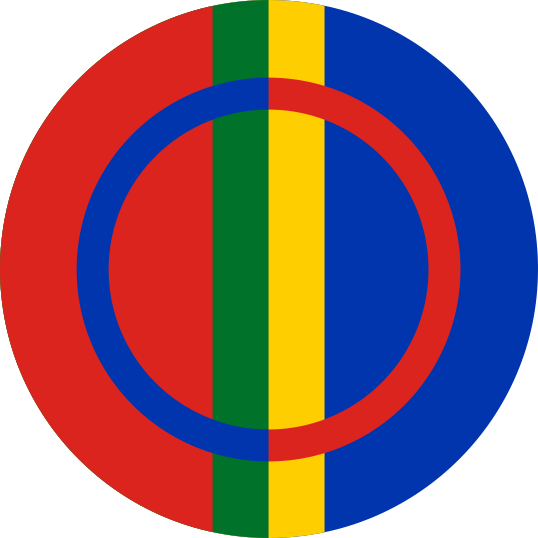
Bures!
Mot manná?
Summary
Learning a Sami language is much more than just a linguistic hobby.
It’s a direct bridge to the rich heritage of the Sápmi region.
You get to challenge your mind while actively supporting an endangered language.