
What Is Joik? Let Me Explain This Sámi Musical Tradition

Author
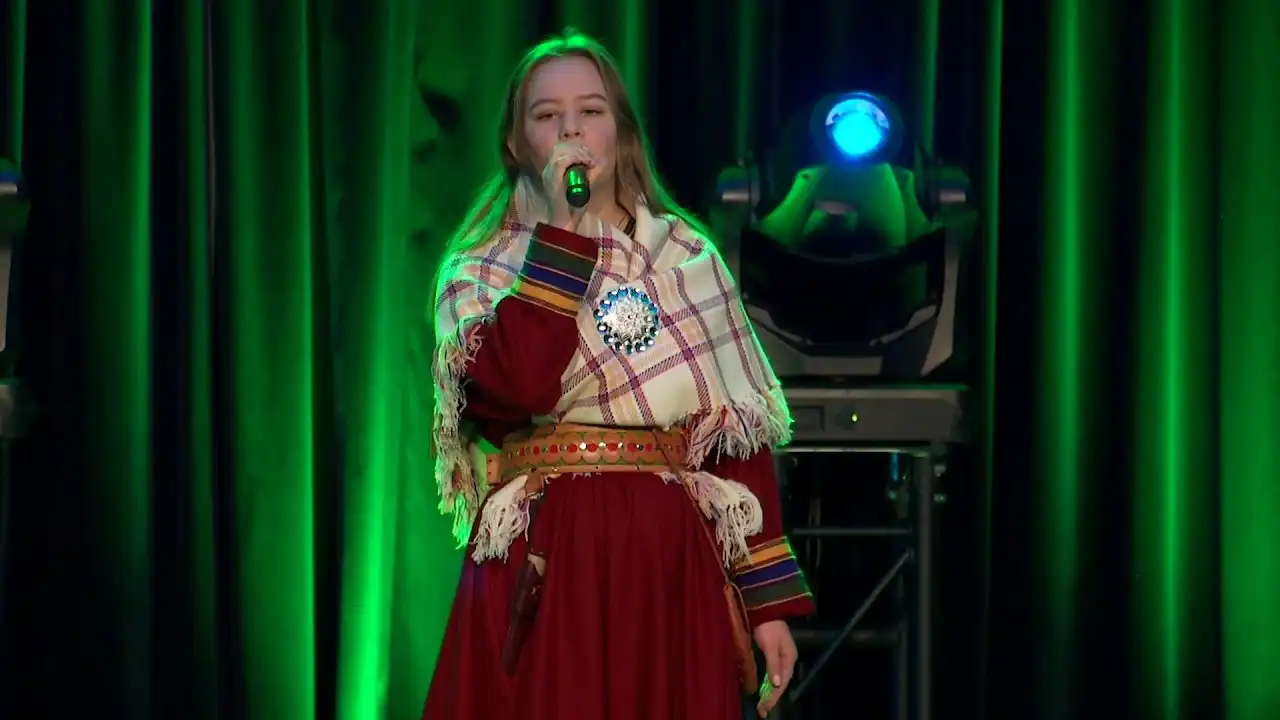
If you have ever listened to Sami radio or watched Eurovision, you might have heard a very distinct style of singing called joik.
To the untrained ear, it might sound like chanting or humming without words.
But for us Sami people, it is one of our most important cultural expressions. It’s how we remember our history, our land, and our loved ones.
It’s considered one of the oldest continuous musical traditions in Europe.
But strictly speaking, joik is not just “singing.”
It’s a unique vocal style that uses the throat in a specific way, often sounding guttural or sharp.
Understanding joik is essential if you want to understand the Sami soul.
Table of Contents:
What exactly is a joik?
A joik (spelled juoigos or luohti in North Sami) is a traditional form of song.
Unlike Western music, which usually relies heavily on lyrics to tell a story, a joik relies on melody, rhythm, and timbre (the character of the sound).
Many joiks do not have actual lyrics. Instead, the singer uses syllables like lo-lo, nu-nu, or go-go. These sounds help carry the melody. However, some joiks do have words, usually short phrases sung in the middle of the melody to give context.
A joik is meant to reflect the essence of a person, an animal, or a place.
When you hear a joik dedicated to a wolf, the rhythm might sound like a wolf trotting through the snow. If it’s a joik for a mountain, the melody might feel heavy, steady, and grand.
You don’t joik about something
This is the most important concept to learn, and it touches on both culture and grammar.
In English, you might say: “I’m singing a song about my father.”
In Sami tradition, we do not joik about a subject. We joik the subject itself.
You capture the spirit of the person or thing through sound.
When a juoigi (a person who joiks) performs a joik for their friend, they are not describing the friend. They are bringing the friend’s presence into the room.
It’s said that when you joik someone, they’re there with you.
Because of this, a joik is often given as a gift.
It’s common for parents to make a joik for their children when they are born. As the child grows, the joik might change slightly, just as the person changes.
Here is how you would say “I joik my father” in North Sami. Notice there is no word for “about” (birra). It’s a direct action.
Mun juoiggan áhči.
The circular structure
Western songs usually have a beginning, a middle, and an end.
A traditional joik is different. It’s circular.
It often has no definite start or finish. The melody repeats in a loop. This represents the cyclical nature of life, the seasons, and time itself in the Arctic. A joiker can keep going for as long as they feel the connection to the subject, or they can stop abruptly.
This can be confusing for new listeners who are waiting for a chorus or a finale. In joik, the “feeling” is more important than the song structure.
Regional variations of joik
Just like there are different Sami dialects, there are different styles of musical expression across Sápmi (the Sami homelands).
North Sami (Luohti)
This is the most famous style. It often uses a pentatonic scale (five notes) and can be quite rhythmic. This is the style you often hear mixed with modern pop or rock music today.
South Sami (Vuolle)
The South Sami style is often called vuolle. It can sound a bit more melodic and softer compared to the sometimes harsh sounds of the North.
Skolt Sami (Leu’dd)
The Skolt Sami tradition is called leu’dd. This is actually quite different from the Northern luohti. Leu’dd is much more narrative. It almost always tells a story with words, describing events or people in detail, almost like a sung poem.
Useful joik vocabulary
If you want to discuss music in Sami, here are the essential words you need to know. These are in North Sami, as it is the most widely spoken variety.
| English | North Sami | Context |
|---|---|---|
| To joik (verb) | Juoigat | The action of performing. |
| A joik (noun) | Luohti | The song itself. |
| Joiker (noun) | Juoigi | A person who performs joik. |
| Person/Animal joik | Persovnnaluohti | A specific joik dedicated to a person. |
Here is an example of how you might ask someone if they know how to joik:
Máhtátgo juoigat?
Summary
Joik is a powerful way to remember and honor the world around us. It is not just music; it’s a tool for memory and identity.
To recap:
- Luohti is the North Sami word for a joik.
- It often uses syllables rather than full lyrics.
- You joik someone, not about someone.
- The structure is circular without a clear end.
If you want to listen to some examples, I recommend searching for artists like Nils-Aslak Valkeapää (traditional), Mari Boine (fusion), or KEiiNO (pop).
Do you have a favorite joik artist?