The 9 Sami Languages: Differences And Which One To Learn

Author
When people decide they want to learn Sami, they usually run into a big surprise right away: Sami isn’t just one language.
In fact, it’s a group of related languages spoken across northern Europe.
If you’re starting your language learning journey, trying to figure out which one to study can be confusing. In this guide, we’ll look at the 9 living Sami languages, how they’re different, and how to choose the right one for you.
Table of Contents:
What are the Sami languages?
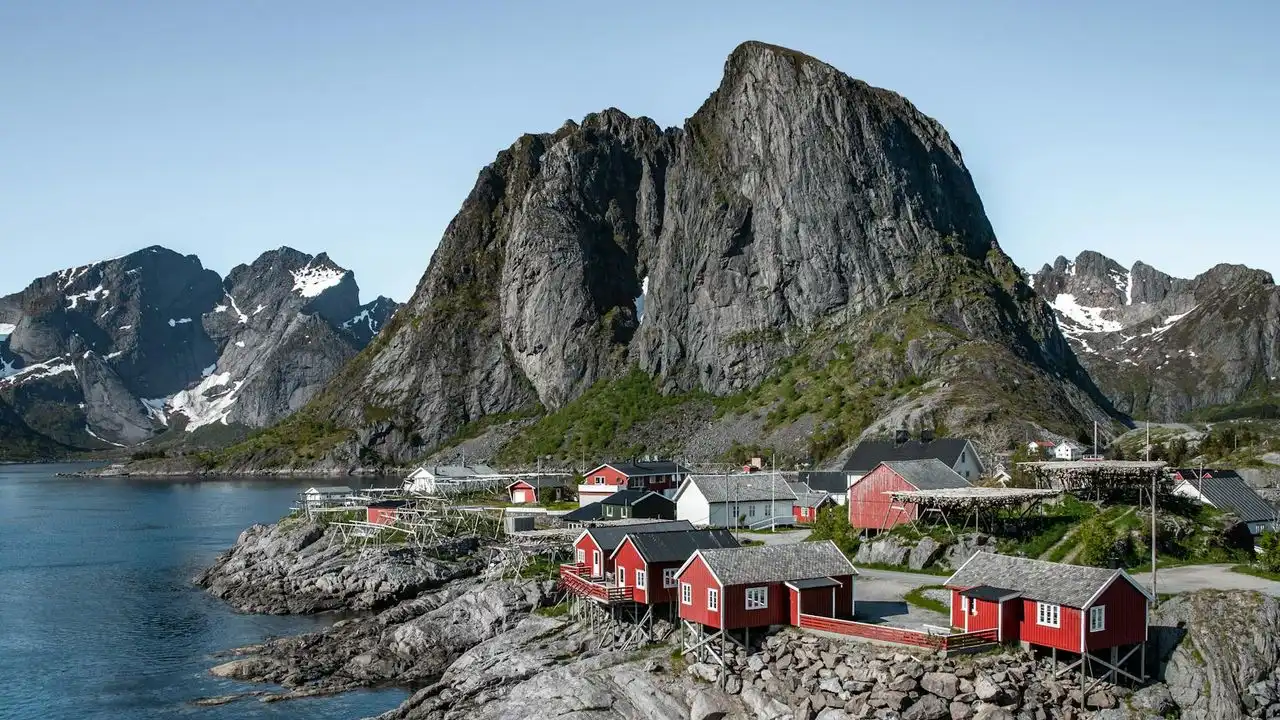
The Sami languages are spoken in a cultural region known as Sápmi. This area stretches across the northern parts of four countries: Norway, Sweden, Finland, and Russia.
Sami belongs to the Finno-Ugric language family. That means these languages are closely related to Finnish and Estonian, and distantly related to Hungarian. They’re completely unrelated to Scandinavian languages like Norwegian or Swedish!
Historically, there were at least 11 Sami languages. Today, 9 of them are still spoken, though many are highly endangered.
The 9 living Sami languages
To help you understand the landscape of Sápmi, here’s a simple breakdown of the 9 living Sami languages, where they’re spoken, and roughly how many people speak them.
| Sami Language | Main Region (Countries) | Estimated Speakers |
|---|---|---|
| Northern Sami | Norway, Sweden, Finland | 20,000 - 25,000 |
| Lule Sami | Norway, Sweden | 1,000 - 2,000 |
| South Sami | Norway, Sweden | 600 - 1,000 |
| Inari Sami | Finland (Lake Inari area) | 400 - 500 |
| Skolt Sami | Finland, Russia | 300 - 400 |
| Kildin Sami | Russia (Kola Peninsula) | 300 - 500 |
| Pite Sami | Sweden, Norway | 30 - 50 |
| Ume Sami | Sweden, Norway | 20 - 30 |
| Ter Sami | Russia (Kola Peninsula) | Less than 10 |
(Note: Akkala Sami and Kemi Sami are two other Sami languages, but they sadly lost their last native speakers in recent history.)
Major differences between the languages
You might be wondering, “Are the Sami languages just different accents?”
No. They’re separate languages. However, they form what language experts call a dialect continuum.
Imagine a long chain of neighborhoods. People in neighborhood A can easily understand their next-door neighbors in neighborhood B. Neighborhood B can understand neighborhood C. But if neighborhood A tries to talk to neighborhood F at the other end of the chain, they won’t understand each other at all.
Here are a few of the biggest differences between them:
Mutual intelligibility
As mentioned above, languages that are geographically close share a lot of similarities. A Northern Sami speaker and a Lule Sami speaker can catch the general idea of what the other is saying with some effort.
However, a South Sami speaker and a Skolt Sami speaker wouldn’t be able to hold a conversation. The grammar, vocabulary, and pronunciation are just too different.
Writing systems
Because Sápmi spans across four different modern countries, the writing systems (orthography) have been influenced by the majority languages of those countries.
Most Sami languages use the Latin alphabet but add their own special letters. For example, Northern Sami uses letters like č, đ, ŋ, š, ŧ, and ž.
On the other hand, Kildin Sami, which is spoken in Russia, is written using a modified Cyrillic alphabet (the same alphabet used for Russian).
Vocabulary variations
Sami culture is deeply tied to nature, reindeer herding, fishing, and the local geography.
Because the landscape is very different depending on where you are in Sápmi, the vocabulary changes, too. Coastal Sea Sami communities will have rich vocabularies for ocean fishing, while inland communities will have more detailed words for snow conditions and reindeer herding.
Which Sami language should you learn?
If you’re trying to decide which language to learn, I highly recommend making your choice based on your goals. Here are the two best ways to decide.
Option 1: Choose Northern Sami
If you just want to learn “Sami” because you love the culture, want to visit the region, or are fascinated by the language family, Northern Sami is definitely the one you should choose.
Here’s why:
- It makes up about 75% to 80% of all Sami speakers.
- Almost all Sami TV shows, news broadcasts, and movies are in Northern Sami.
- It’s the easiest one to find learning materials for. You’ll find textbooks, online dictionaries, and audio courses easily.
Here’s a quick example of a common Northern Sami greeting you can start using today:
Bures!
Mo manná?
Option 2: Choose based on your heritage or location
Are you learning Sami because you have Sami ancestry? If so, try to find out exactly where your ancestors lived.
If your great-grandparents came from the Lake Inari region of Finland, you’ll want to learn Inari Sami. If they came from central Sweden, South Sami might be your heritage language. Learning the specific language of your family is an amazing way to reconnect with your roots.
Likewise, if you’re planning to move to a specific town in Sápmi, learn the language spoken in that exact area!
Summary
The Sami languages are a beautiful, diverse group of 9 living languages. While they share the same ancient roots, they’re distinct languages with their own grammar, vocabulary, and spelling rules.
For the vast majority of beginners, Northern Sami is the best starting point because it has the most speakers and the best learning resources. But no matter which one you choose, you’re helping keep an incredible linguistic heritage alive.